
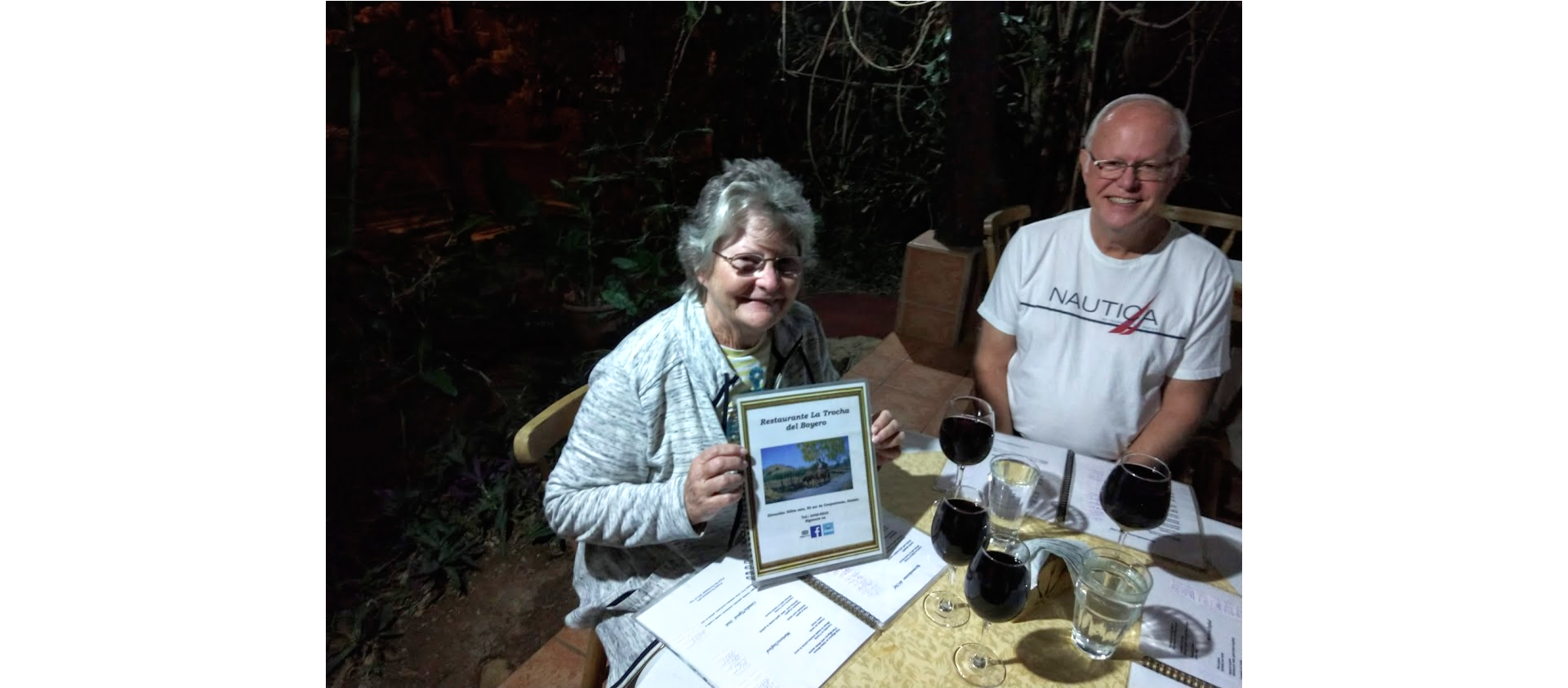
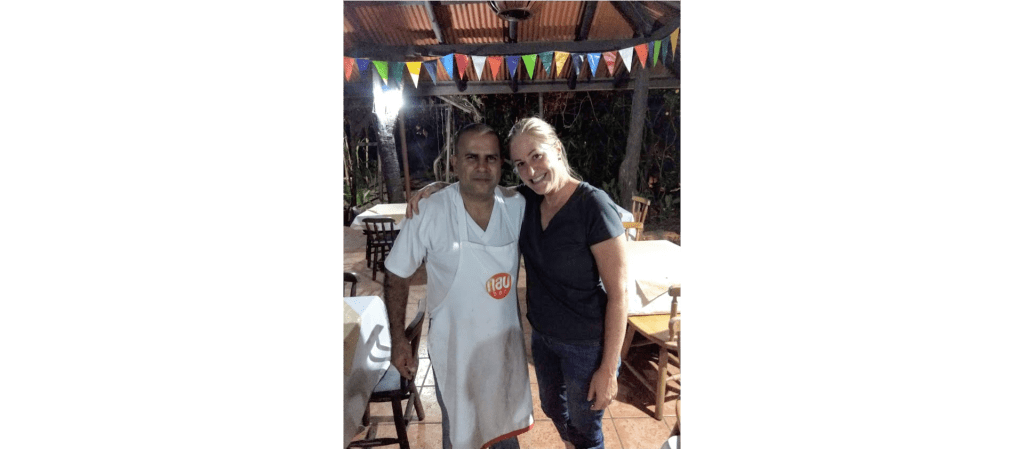
Last night we tried a new restaurant called La Trocha del Boyero (The Trail of the Ox Herder) . Boyeros were the guys who would lead the oxcarts full of coffee from the farms to market. La Trocha is run by our new friend, Frank. It is an interesting operation to say the least. Frank’s restaurant is at his house. He’s re-purposed his front yard has a full kitchen and a palapa for seating. Even though it’s in a residential neighborhood, the lush growth makes it feel like you are in the jungle.
It’s just Frank. And Frank doesn’t speak English, which made it a great opportunity for Jill and I to practice Spanish.
All of the following occurred in Spanish:
Frank greeted us and told us to pick any table we wanted. He then came over with menus and asked if we wanted something to drink other than water. We all ordered vino tinto and Frank shuttled out a very drinkable red wine. He explained to us that he makes everything to order so the service might take a little longer but he promised it would be worth the wait. I asked for his recommendation and he told us that it’s his signature Salsa la Trocha that makes everything so good so we couldn’t go wrong with anything that had that sauce. Jill and her parents ordered the seabass and I got chicken, all topped with Salsa la Trocha. Frank told us he likes to top everything with shrimp and asked if any of us have shellfish allergies (we had a little back and forth on that topic because my Spanish isn’t to the point where I’ve heard “shellfish allergy” before 🙂 ). Frank told us our appetizer would be beans and tortillas and asked how spicy we wanted our beans. He brought out a perfectly seasoned warm bean dip with freshly fried corn tortilla chips and went to work on our entrees.
About 15 minutes after we ordered a car pulled up and a runner got out with a shopping bag and trotted up to the kitchen. We can only guess that Frank had run out of something in the kitchen and called in a resupply mission.
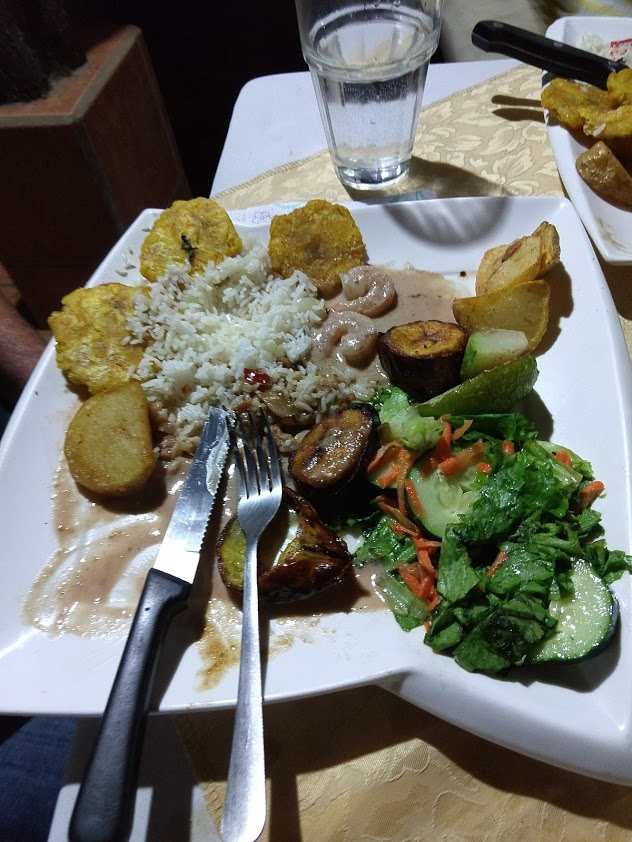
The food was rustic and delicious and the Salsa La Trocha was as advertised. The plates were comically large and were composed of our chosen protein plus shrimp, rice, salad with chayote, fried sweet plantains, fried green plantains, and papas.
Total bill for 4 people including wine was $117, which is on the high end of the Atenas spectrum but totally worth it. At the end of the meal, Frank told us, in Spanish, he’s adding breakfast service soon and we exchanged numbers on WhatsApp so that he can invite us to the soft opening of his breakfast service. He’s going to ping us the day before. Hopefully we can make it work. Frank is an amazingly gracious and accommodating man who wants to make sure his customers’ dining experience is pleasurable. We were the only table at his restaurant last night and he was hopping the entire time taking care of us and cooking our food. It will be interesting to see how he handles a busy evening.
This morning at Spanish class we worked on expository skills. Profesora Maria gave us each several cards that when put together made a sequence of events. The set of cards I got showed a boy approaching a hot dog vendor and went all the way through the purchase and him eating the hot dog. Jill got a set of cards showing a girl harvesting apples from an apple tree. We had to make up a story for each set of cards and then tell that story, fielding questions asking for more detail from each other and la profesora. We had great fun with that exercise, making up backstories for our characters. My protagonist was Rafael, named for the patron saint of Atenas. I will forever remember the made up saga of “Rafael and el Perro Caliente!”
Jill has clients this afternoon so it was up to me to show her parents a good time. We bought our coffee at the feria Friday from the El Toledo coffee farm and Jill noticed they do tours. Jill booked us for a 1PM tour of the coffee plantation today.
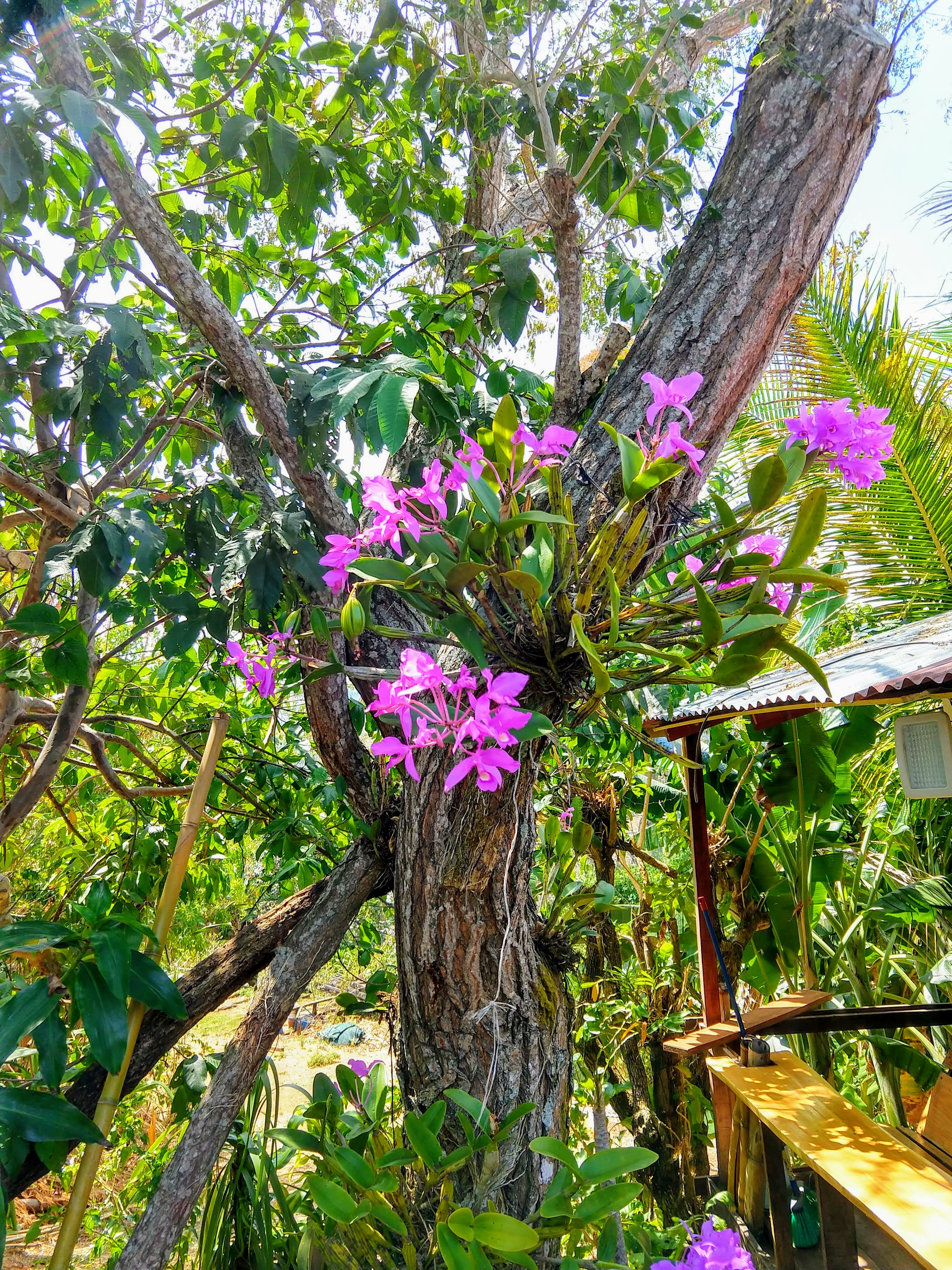
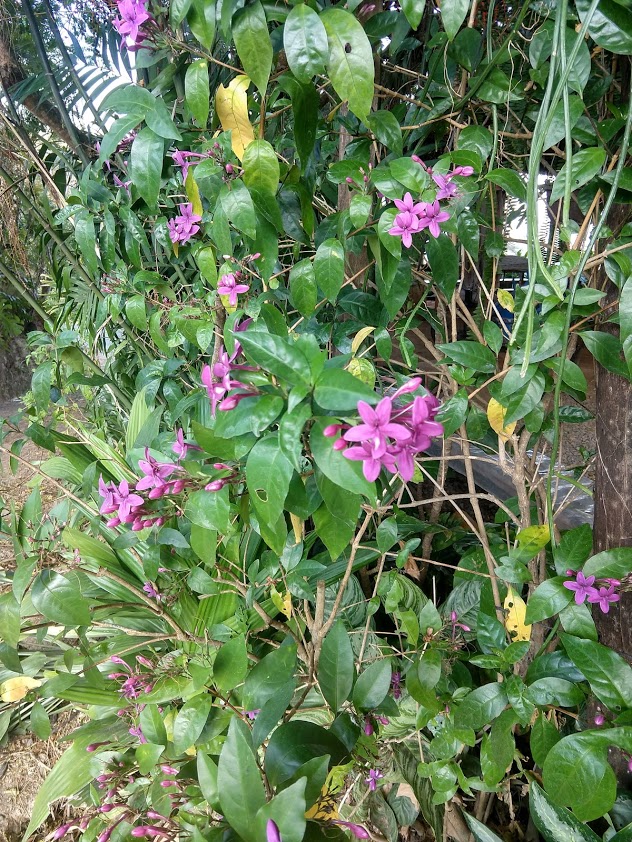
There was an air plant with these beautiful flowers growing on the bark of a tree where we parked for the coffee farm tour. The most amazing stuff just grows here.
I love to hear people talk about a subject that they are experts in. Gabriel, who runs the coffee operation at El Toledo, is one of those people.
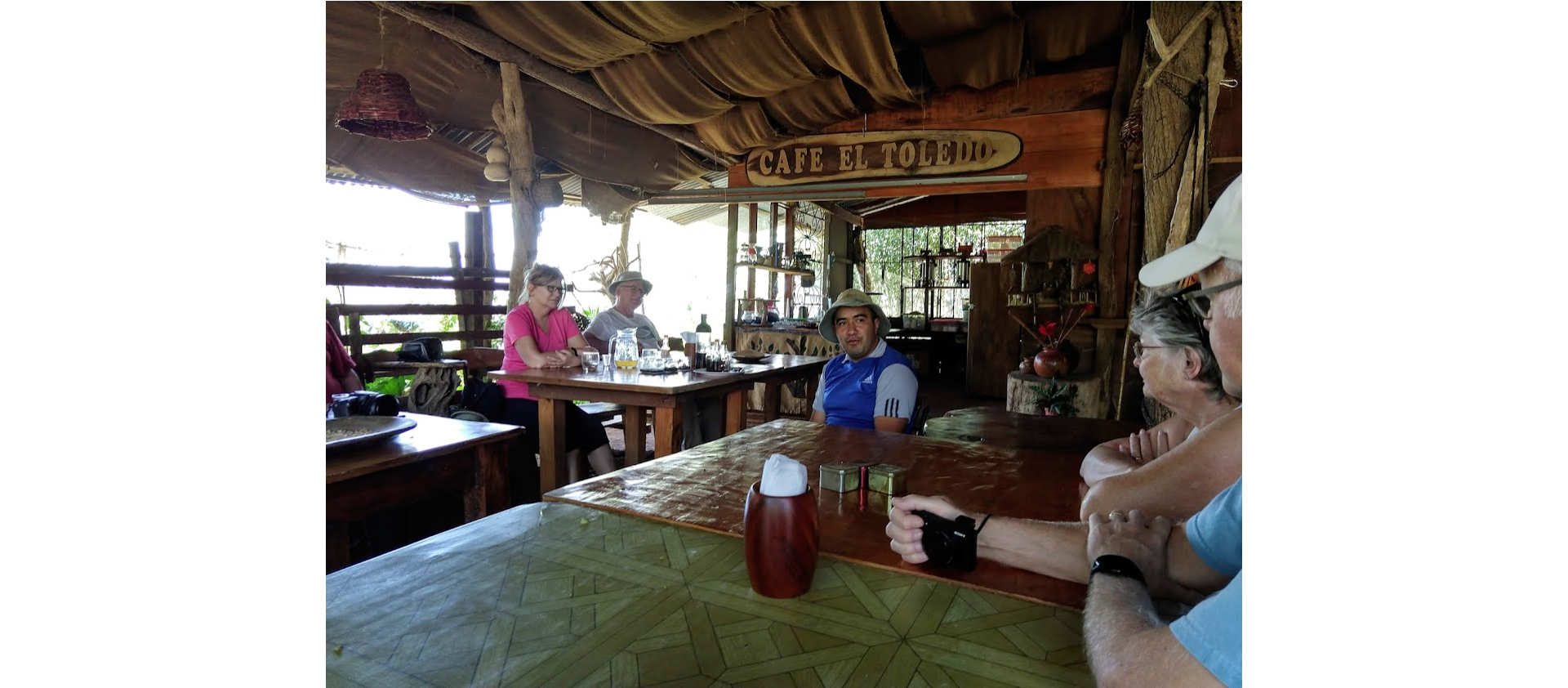
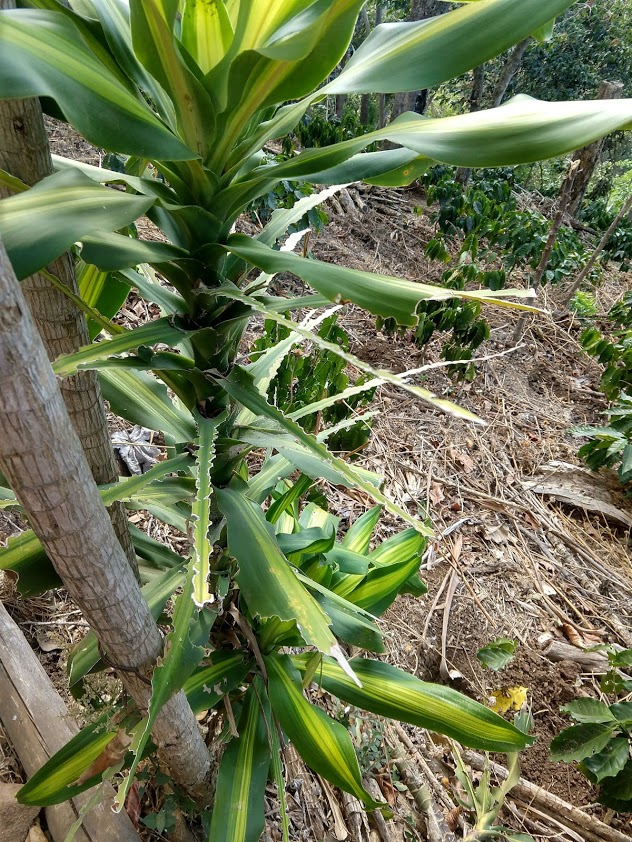
Gabriel took us through the various ways of farming that they’ve used on their 7 acre farm and what they’ve learned along the way. They started with mono-culture and lots of chemicals and then his father got ill from the chemicals so they switched to organic farming, but still mono-culture. Then they evolved to what he called perma-culture where they have a diverse set of flora all over the farm. They had banana trees, mango trees, tangerine trees, gooseberries, and also hardwoods mixed in with their coffee. I’ve previously mentioned the dracaenas, or corn plants, that we see used as living fence posts all over Costa Rica. Today we learned these same plants are used as a sacrificial bug attractors on the coffee farm. Apparently the same bugs that eat the leaves of coffee bushes actually prefer the leaves of the corn plants. So Gabriel has planted corn plants all over the farm to help combat erosion and to give the bugs something that they prefer over coffee leaves. Saves on the need for insecticides, reduces erosion, and keeps the coffee plants unmolested. David Moreland will be glad to hear they’ve also strategically mixed in other species whose flowering season varies so that something is flowering year round, giving the bees a constant buffet.
We got to sample light, medium, and dark roast coffee and Gabriel explained what happens to the coffee bean at each level of roasting.
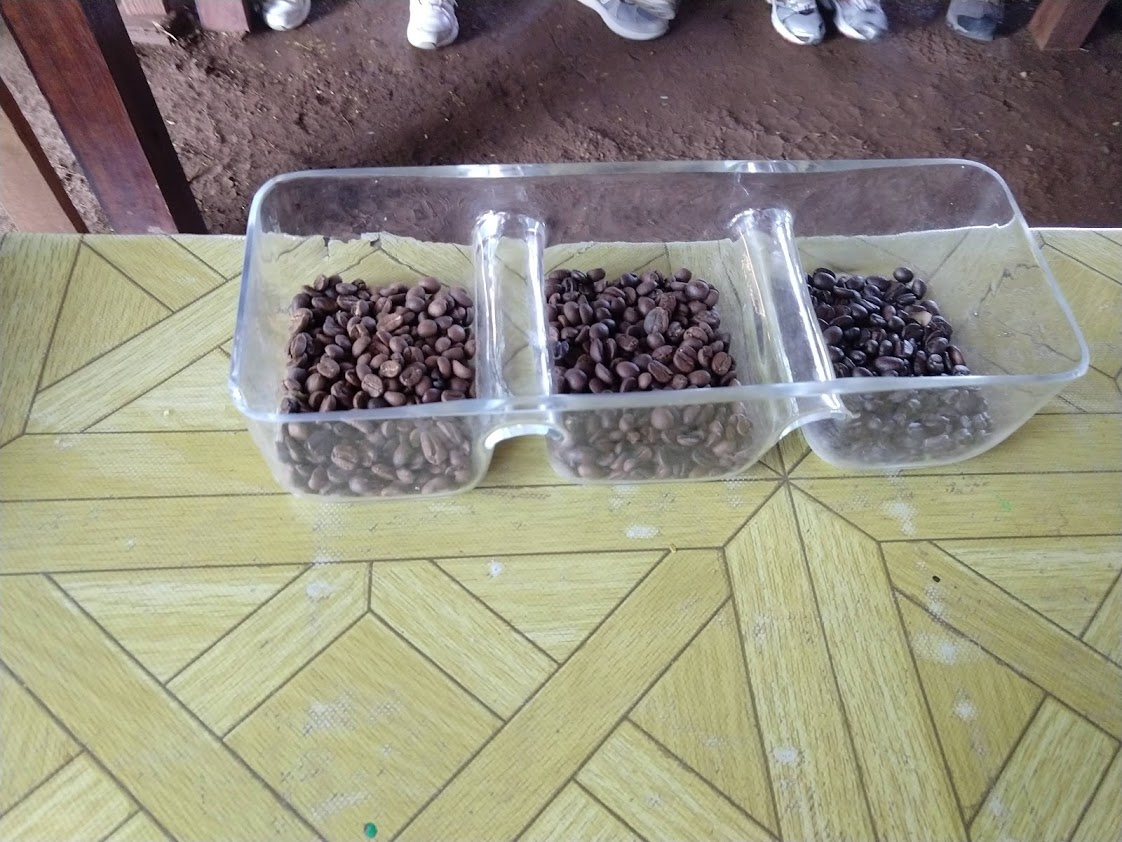
I ate all of this stuff up. We learned that the conventional wisdom that freezing coffee beans will keep them fresh is bogus. Freezing roasted coffee beans causes the remaining water in the bean to expand when frozen, cracking the air-tight skin of the bean. The resulting fissures allow oxidation (bad) to happen. Who knew? Gabriel says medium roast coffee beans will stay fresh for 4 weeks after roasting. Light roast will stay fresh for 6 weeks and dark roast for 2 weeks. The moral of the story is buy your beans a pound at a time from a roaster that has good turnover and roasts frequently, keep the beans dry and in the dark, and consume them within the allotted freshness window.
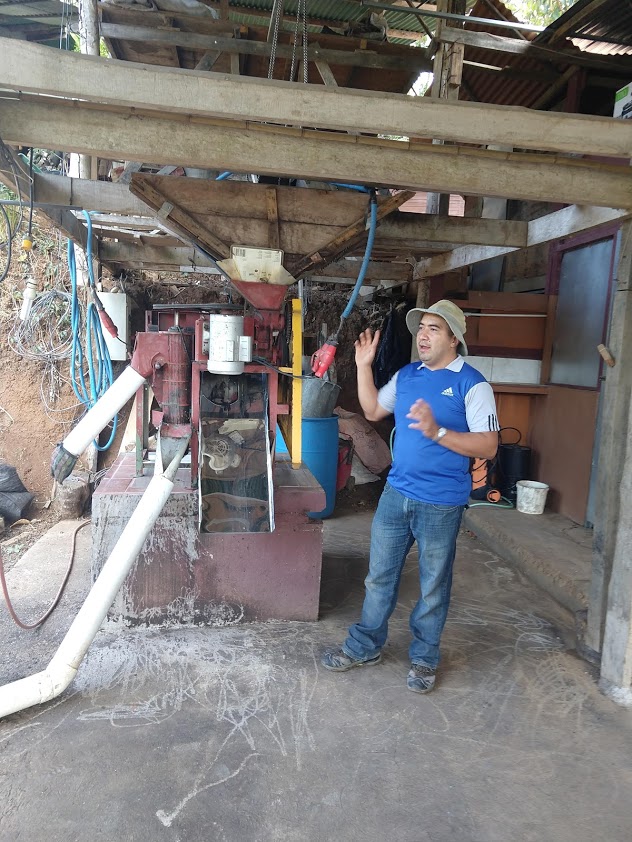
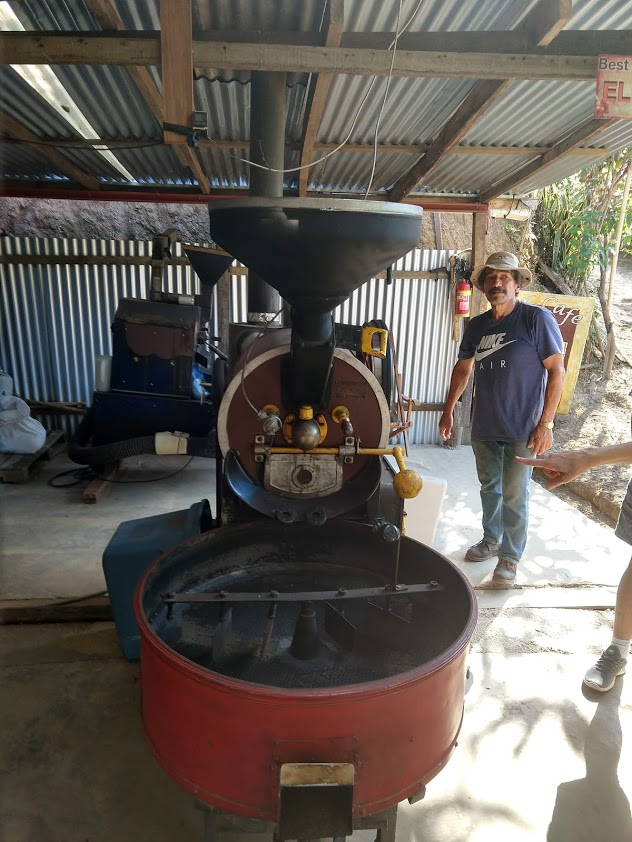
The Toledo Coffee farm covers 3 hectares (about 7 acres). On that 7 acres they have 15,000 coffee bushes and a whole bunch of other other crops interspersed with the coffee.
I’m definitely taking Non and D on the El Toledo coffee tour when they come!
Jill’s parents leave tomorrow morning on a 9AM flight. We’ve had a great visit and hope they are now fond of Costa Rica. We will drop them at the airport and then we are meeting Profesora Ana in Alajuela (the town where the airport and PriceSmart are) for another field trip. That saves Ana, who lives in Alajuela, a 2 hour bus ride each way to get to and from the school.


Perro caliente! I am so excited to meet Gabriel and go coffee touring! Following by 14oz of my favorite red beverage.
LikeLike